




How is aqueous ozone applied in commercial food processing and agricultural packing facilities?
Aqueous ozone (O3) is an industrial-grade sanitizer in commercial food processing and post-harvest agricultural packing operations. Approved by the US FDA as a Direct Food Additive under 21 CFR 173.368 and certified for USDA Organic production, aqueous ozone serves as a eco-friendly alternative to traditional chlorine and peracetic acid (PAA) chemical interventions.
Key Application Methods in Industrial Facilities
1. Produce Flume & Immersion Wash Tanks
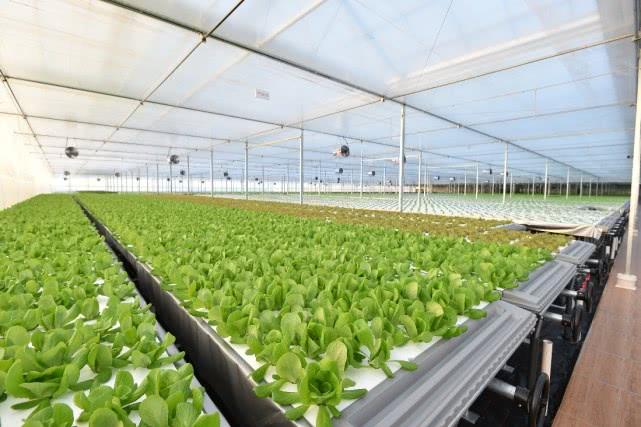
In commercial fruit and vegetable packing facilities, produce travels through automated flumes and soak tanks to remove field dirt and reduce microbial loads.
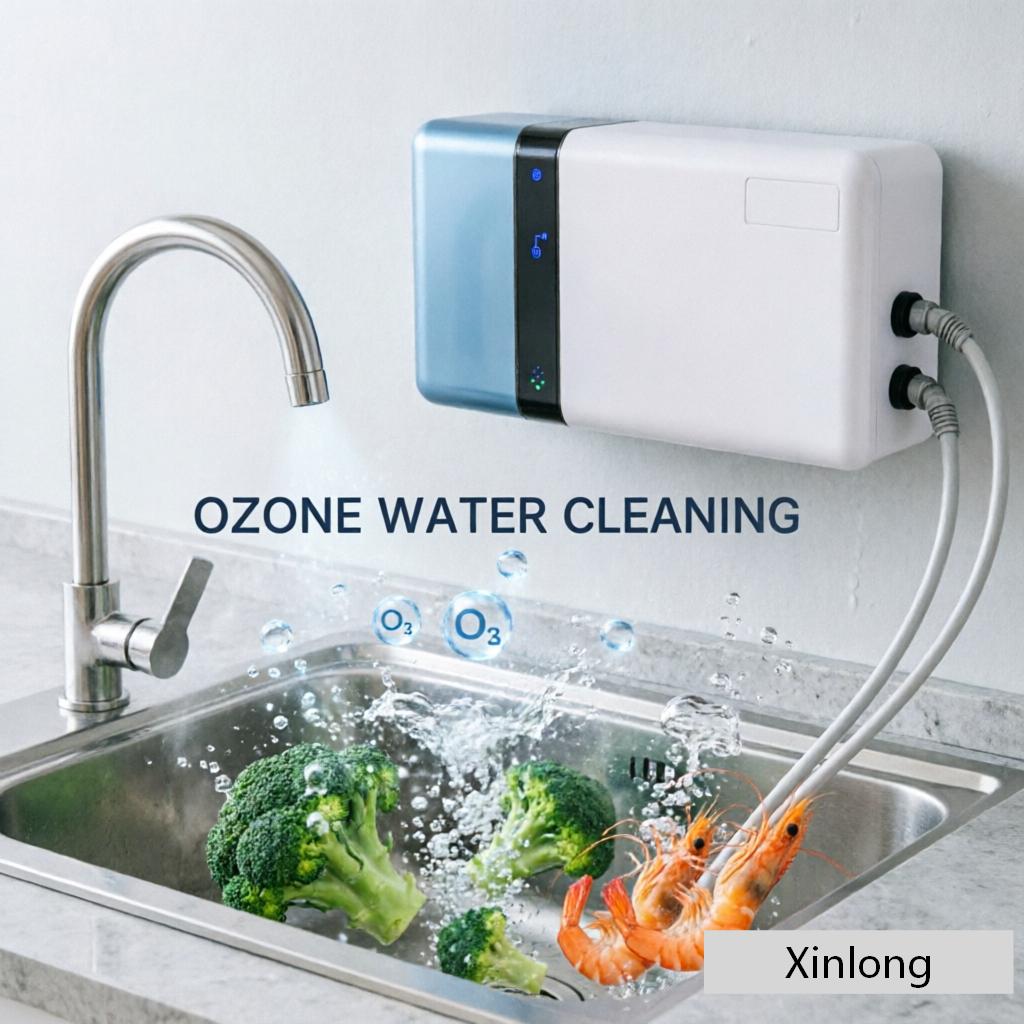
- Mechanism: Dissolved ozone gas is continuously injected into the circulating flume water via Venturi injectors or electrolytic cell arrays.
- Target Concentration: Typically maintained between 1.5 to 3.5 ppm (parts per million) dissolved O3.
- Function: Inactivates free-floating pathogens (E. coli, Listeria, Salmonella) in the water, preventing cross-contamination between batches while simultaneously treating the produce surface.
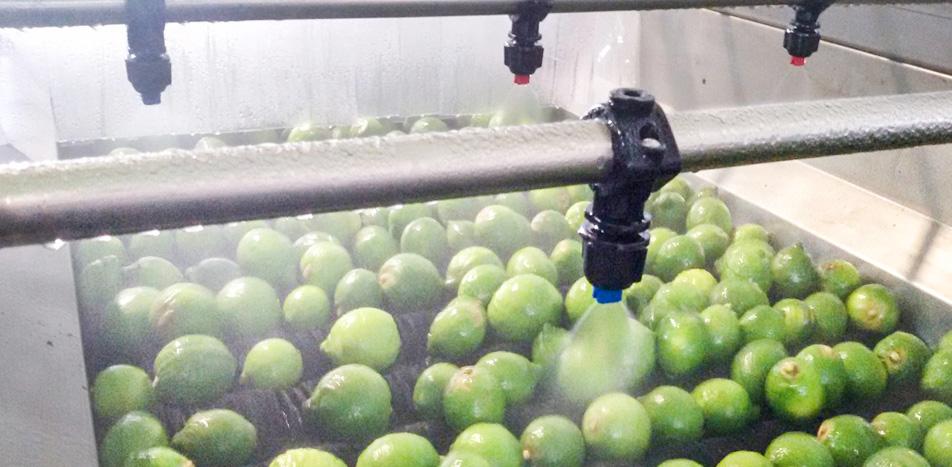
2. High-Pressure Spray Bars and Overhead Misting
For delicate or loose commodities—such as berries, stone fruit, and pre-cut leafy greens—direct immersion can cause physical damage.
- Mechanism: Spray header manifolds deliver micro-droplets of aqueous ozone directly onto the produce as it moves along roller or mesh conveyor belts.
- Target Concentration: 2.0 to 4.5 ppm with short contact times (15 to 45 seconds).
- Function: Provides rapid microbial oxidation and pesticide neutralization without soaking or waterlogging sensitive commodities.
3. Clean-in-Place (CIP) & Facility Sanitation
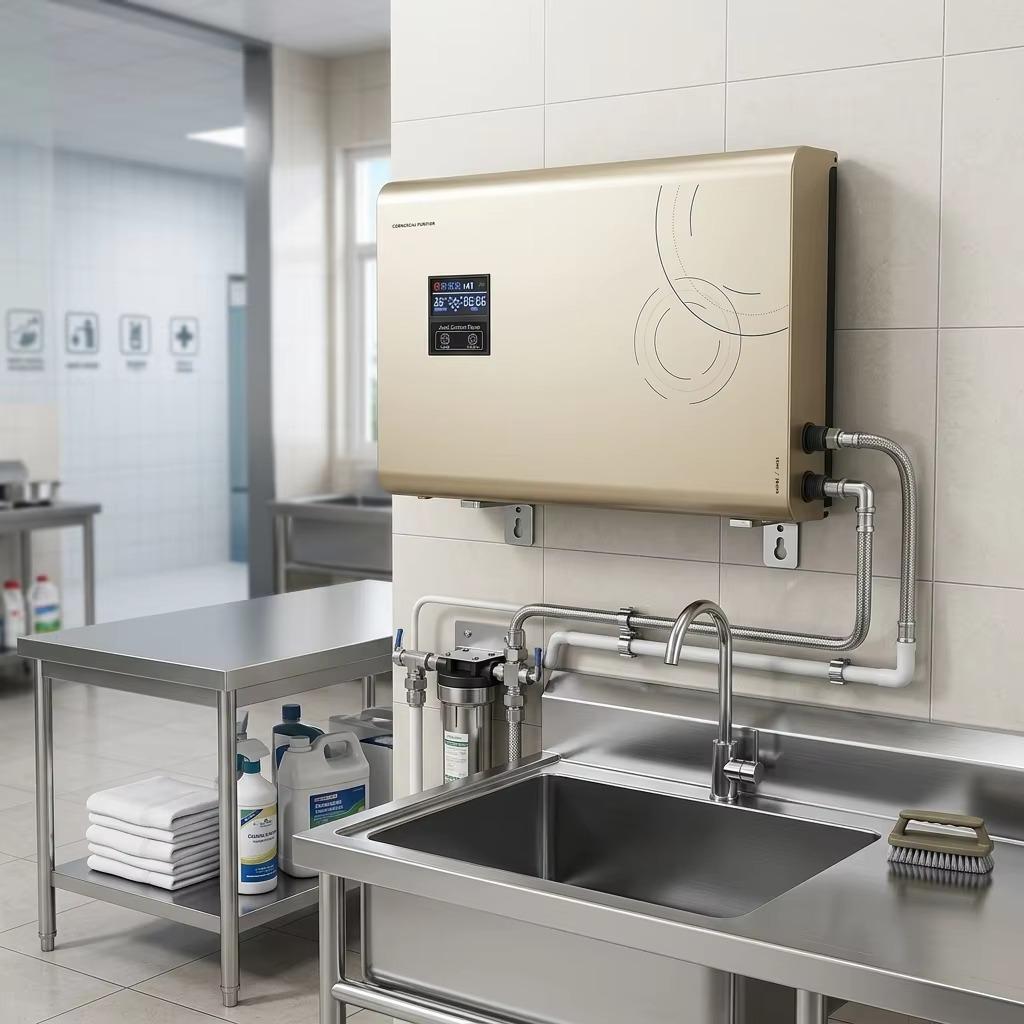
Beyond direct food contact, aqueous ozone is widely used to clean process equipment, cutting lines, conveyor belts, and drain systems.
- Mechanism: Ozonated water is pumped through closed-loop piping or applied via mobile high-pressure sanitizing carts.
- Function: Destroys bacterial biofilms formed on stainless steel surfaces up to 3,000 times faster than chlorine, drastically reducing downtime needed for equipment sanitation shifts.
4. Process Water Recycling & Filtration Systems
Freshwater consumption is a major operational cost for agricultural packing houses.
- Mechanism: Spent wash water is collected, filtered, and re-ozonated to degrade accumulated organic carbon and bio-burden.
- Function: Allows facilities to safely recycle up to 80% of process water, complying with strict municipal discharge limits on Chemical Oxygen Demand (COD) and Biological Oxygen Demand (BOD).
Operating Parameters & Technical Comparison
The effectiveness of aqueous ozone depends on maintaining optimal oxidation-reduction potential (ORP) and dissolved concentration levels:
Sanitization Efficacy∝Concentration (C)×Contact Time (t)
| Parameter | Chlorine / Bleach | Peracetic Acid (PAA) | Aqueous Ozone (O3) |
|---|---|---|---|
| Typical Dose | 50 – 200 ppm | 30 – 80 ppm | 1.0 – 4.0 ppm |
| Contact Time | 1 – 5 minutes | 1 – 2 minutes | 15 – 60 seconds |
| Rinse Requirement | Requires fresh water flush | Minimal | None (Reverts to O2) |
| Chemical Storage | High risk / On-site barrels | High risk / Corrosive | Generated on-demand (Zero storage) |
| Disinfection Byproducts | Trihalomethanes (THMs) | Vinegar odor / Acetic acid | None |
| Organic Certification | Restricted | Approved | Fully Compliant |
Primary Benefits for Commercial Operators
- Extended Storage & Reduced Shrinkage: Destroys ethylene gas released by ripening produce and kills spoilage fungi (Botrytis cinerea, Penicillium), extending cold storage shelf life by 20–50%.
- Reduced Chemical Utility Expenses: Eliminates the ongoing logistics, hazard storage, and procurement costs of chemical drums; requires only ambient air/oxygen and electricity.
- No Chemical Odor or Off-Flavors: Unlike chlorine or acetic acid sanitizers, ozone leaves no chemical odor, off-flavor, or discoloration on fresh fruit and vegetable tissue.
- Wastewater Compliance: Eliminates toxic chemical discharges, enabling facility compliance with strict local environmental regulations on wastewater runoff.
Want to look at typical engineering specs and ROI calculations for commercial ozone systems?
Related Posts