




Brewery Sanitation: Fermentation Tank Sterilization via Ozonated Water Rinsing
The Cleanliness Dilemma in Modern Craft Brewing
In craft brewing, batch consistency and flavor purity dictate commercial survival. A single colony of Pediococcus, Lactobacillus, or wild yeast (Saccharomyces cerevisiae var. diastaticus) surviving in a fermenter or unitank can spoil thousands of liters of beer, causing off-flavors, turbidity, or secondary fermentations after packaging.
Traditional Clean-in-Place (CIP) sanitation protocols rely heavily on chemical sanitizers like peracetic acid (PAA), chlorine dioxide, or iodophors. While effective at microbial inactivation, these traditional chemicals carry hidden operational overhead:
- Residual Chemical Risks: Trace chemical residues alter delicate hop aromas and foam head stability.
- Excessive Water Consumption: Multiple fresh water rinses are mandatory to remove chemical residues before knocking down fresh wort.
- Corrosion of Stainless Steel: Peracetic acid and halogenated sanitizers accelerate pitting corrosion on 304/316 stainless steel tanks and tri-clamp gaskets over repeated thermal and chemical cycles.
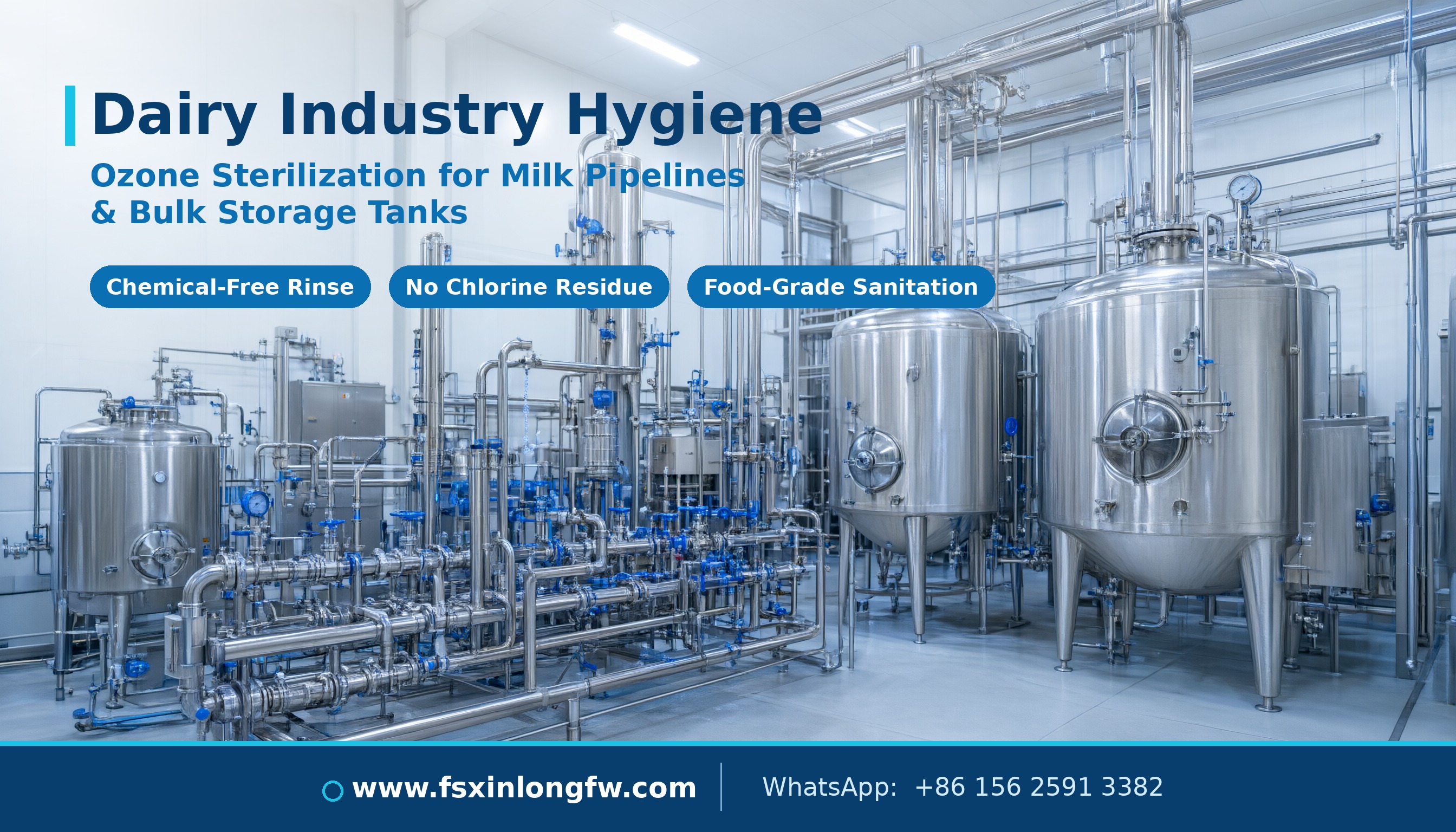
Adopting an industrial brewery ozone sanitizer system addresses these sanitation challenges by delivering rapid cold-water microbial destruction without leaving chemical byproducts.
Why Ozonated Water Superiorly Sanitizes Fermentation Vessels
Ozone (O3) is an allotrope of oxygen with a standard redox potential of +2.07 V, making it one of the most powerful commercially available oxidizing disinfectants. When dissolved into water via high-efficiency venturi injection, high-concentration aqueous ozone attacks microbial cell walls instantly through direct oxidation.
       Ozone Dissolution Matrix
+------------------------------------+
|  Concentrated Ozone Gas Generator  |
+------------------------------------+
                  |
                  v
+------------------------------------+
| Venturi Injector + Reaction Vessel |
+------------------------------------+
                  |
                  v  (Aqueous Ozone Stream: 2.0 - 4.0 ppm)
+------------------------------------+
|   CIP Spray Ball / Fermenter Rinsing|
+------------------------------------+
                  |
                  v  (Decomposes within 15–20 minutes)
+------------------------------------+
| Pure Dissolved Oxygen + Zero Residue|
+------------------------------------+
Key Technical Advantages for Commercial Breweries
- Zero Off-Flavor Risk (No Post-Rinse Required)
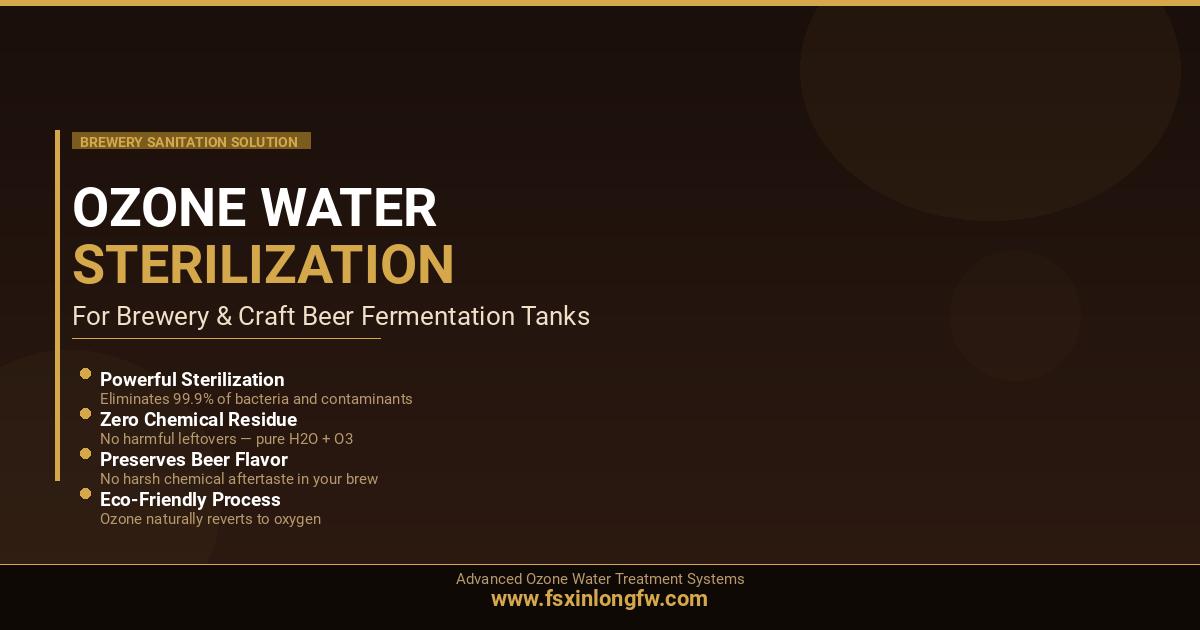
Unlike quaternary ammonium or acid sanitizers, aqueous ozone naturally reverts into pure dissolved oxygen (O2) within 15 to 20 minutes at ambient water temperatures. Because zero chemical residue remains on the interior tank surface, brewers eliminate post-sanitation water rinses entirely.
2. Broad-Spectrum Microbial Inactivation
Aqueous ozone provides complete broad-spectrum destruction of Gram-positive and Gram-negative bacteria, molds, spores, and biofilm matrices:
- Lactobacillus brevis
- Pediococcus damnosus
- Wild Yeasts & Spoilage Molds
- Listeria monocytogenes
3.Substantial CIP Cycle & Water Savings
Integrating a dedicated beer tank cleaning ozone system into your existing CIP skid streamlines the final rinse phase into a single cold-water pass.
| Parameter | Conventional PAA Sanitation | Ozonated Water Sanitation |
| Sanitizing Temperature | Ambient / Warm (20-40℃) | Ambient Cold (10-20℃) |
| Contact Time | 15–30 Minutes | 3–5 Minutes |
| Post-Sanitation Rinse | Mandatory (Cold Water) | Not Required |
| Effluent Byproducts | Chemical Salts / Acid Residuals | Pure Dissolved Oxygen (O2) |
| Gasket Degradation | High (Accelerated by acids) | Minimal (Controlled Concentration) |
Step-by-Step Fermenter CIP Protocol with Ozonated Water
Implementing an aqueous ozone rinse into a standard 4-step CIP cycle requires minor operational modifications to ensure max microbial kill rates while protecting equipment life.
- Pre-Rinse & Organic Removal
Execute a standard warm-water pre-rinse (45-50℃) through the top-mounted static or dynamic spray ball to knock down residual yeast cakes and heavy trub.
2.Caustic Wash (Organic Soil Removal)
Circulate a 1.5%–2.0% sodium hydroxide (Caustic Soda) or non-caustic alkaline cleaner at 60-70℃ for 20–30 minutes to strip hop resins and organic protein soils.
3.Fresh Water Intermediate Rinse
Rinse with fresh ambient water until the discharge pH matches city supply levels, ensuring alkaline chemical traces are completely washed out.
4.Ozonated Water Final Sanitation
Inject ozonated water directly through the CIP spray ball at a target dissolved ozone concentration of 2.0 to 3.5 ppm for 3 to 5 minutes of continuous spray ball coverage.
5.Drain & Immediate Wort Transfer
Drain the vessel completely. The fermenter is sanitized and sterile—ready to receive fresh knock-out wort immediately without additional rinsing or steam sterilization.
Choosing the Right Craft Brewery Ozone System Setup
Deploying a commercial craft brewery ozone system involves selecting between mobile plug-and-play carts or centralized skid installations based on brewery footprint and barrel annual output (BBL).
   [ High-Purity Oxygen Generator ]
                 │
                 ▼
    [ Corona Discharge Cell ]
                 │
                 ▼
[ Venturi Injection & Mixing Tank ] ◄── [ Cold Inlet Water ]
                 │
                 ▼
[ Dissolved Ozone Monitor (PPM) ] ──► Auto Feedback Loop
                 │
                 ▼
  [ Ozonated Water to Fermenter ]
Essential System Components
- On-Board Oxygen Concentrator: Delivers 93%±3% pure oxygen gas feed to maximize O3 generator yields and avoid nitrous acid byproduct formation.
- High-Frequency Corona Discharge Generator: Heavy-duty quartz cells built to maintain constant output under high ambient moisture conditions typical of washdown rooms.
- Integrated Dissolved Ozone Metering & Auto-Feedback: Closed-loop sensors dynamically measure inline dissolved ozone levels in real-time, ensuring water delivers the target ppm at the spray ball nozzle.
- Off-Gas Destruct Unit: Catalytic ambient ozone gas destructors purge any un-dissolved O3 gas safely before venting outside the wash cellar.
Technical Specifications & Engineering Selection Guide
When selecting an industrial ozone generator or mobile ozone water cart for microbreweries or high-output regional facilities, use the following operational metrics as reference baselines:
+-----------------------------------------------------------------------------------+
|                           System Selection Matrix                                 |
+----------------------+-----------------------------+------------------------------+
| Equipment Feature    | Mobile Ozone Sanitation Cart| Centralized Brewery CIP Skid |
+----------------------+-----------------------------+------------------------------+
| Target Flow Rate     | 10 – 30 GPM (38 – 113 L/min)| 40 – 120 GPM (150–450 L/min) |
| Aqueous Concentration| 2.5 – 4.0 ppm               | 2.0 – 3.5 ppm                |
| Power Supply         | Single Phase 220V/50-60Hz   | 3-Phase 380V-480V            |
| Primary Application  | 5 BBL – 30 BBL Fermenters   | 50 BBL+ Cellars & Canning    |
+----------------------+-----------------------------+------------------------------+
Optimize Your Brewery Sanitation & Equipment ROI
Transitioning to aqueous ozone tank sterilization reduces CIP cycle durations by up to 30%, slashes hot-water energy demands, and prevents chemical residue contamination in finished craft beers.
Our engineering team custom builds heavy-duty brewery ozone sanitizers, turnkey aqueous ozone carts, and high-concentration industrial ozone generators designed specifically for the demanding environment of modern breweries and beverage bottling plants.
Tags:
Related Posts