




Ozone CIP Cleaning for Milk Pipelines & Bulk Tanks | Dairy Hygiene
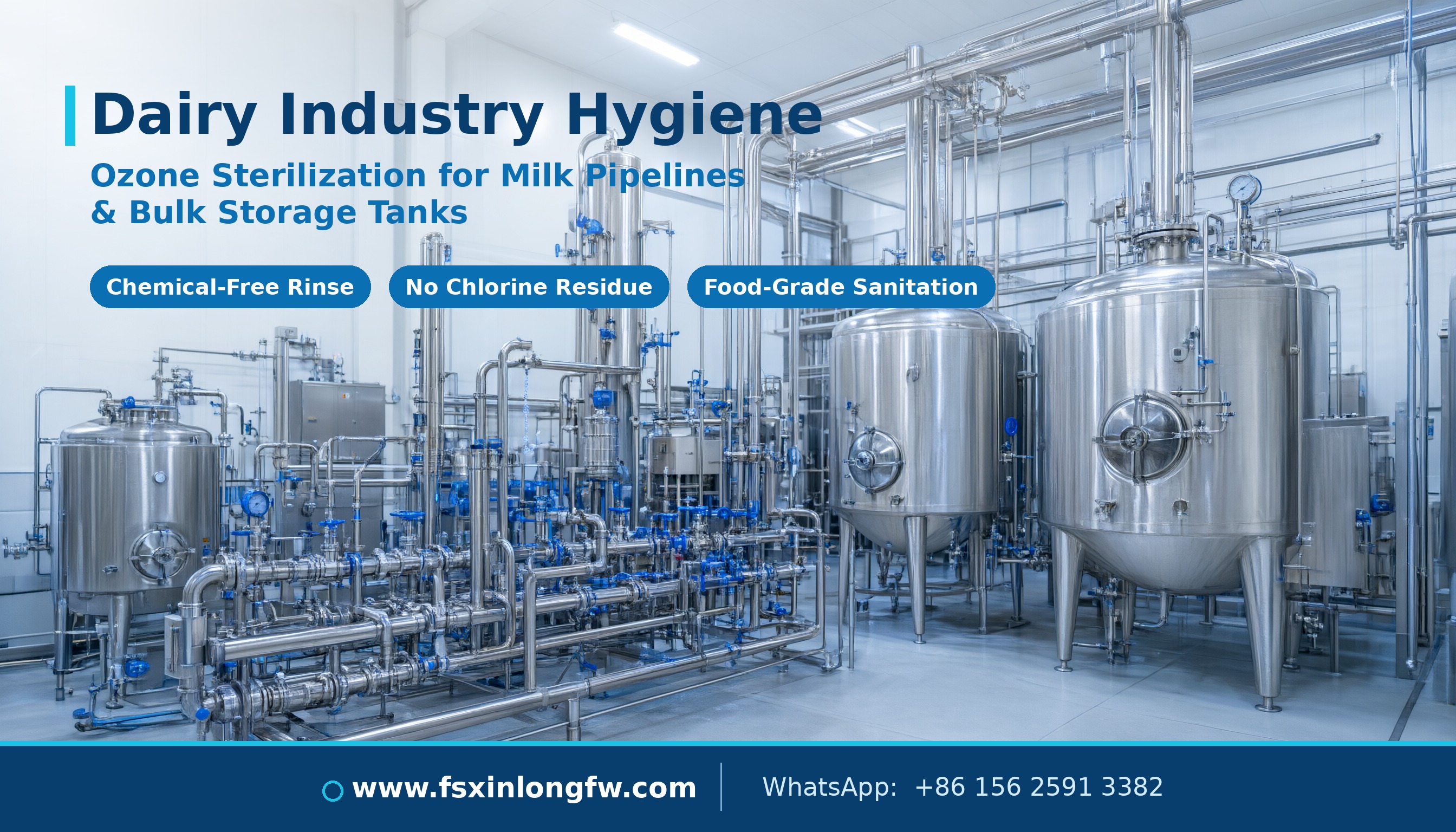
Dairy Industry Hygiene: Ozone Sterilization for Milk Pipelines and Bulk Storage Tanks
Every dairy manager knows the daily battle inside a Clean-in-Place (CIP) loop. Milk fats, proteins, and minerals leave behind stubborn biofilms and milkstone inside stainless steel pipelines and bulk cooling tanks. For decades, the standard response has been aggressive cycles of caustic soda, acid washes, and chlorine-based sanitizers—all backed by energy-draining hot water.
While traditional chemical sanitation gets the job done, it comes with mounting headaches: strict residue limits from milk processors, corroded rubber gaskets, high wastewater treatment fees, and rising boiler fuel bills. That is why commercial dairy farms and milk processing plants are shifting toward dairy equipment ozonated rinse systems to modernize their CIP protocols.
Why Traditional Dairy CIP Chemicals Are Falling Short
In modern milk production, keeping bacterial counts low isn't just about food safety—it directly impacts your milk check and shelf life. Yet relying solely on chlorine, peracetic acid (PAA), and boiling water creates three major operational bottlenecks:
- Chemical Residue and Flavor Risks: Even minor rinsing errors can leave trace chlorine or iodine in bulk tanks, risking rejected loads or off-flavors in finished dairy products.
- High Thermal Energy Costs: Heating hundreds of gallons of rinse water to 170°F+ (77°C+) multiple times a day represents one of the largest utility expenses in a milking parlor or bottling plant.
- Biofilm Resistance: Microorganisms like Listeria, E. coli, and thermoduric bacteria hide beneath mineral scale. Standard chemical sanitizers often struggle to penetrate mature biofilms without increasing chemical concentrations—which in turn eats away at pump seals and valve elastomers.
How Ozonated Water Works in Milk Pipelines and Bulk Tanks
Dissolved ozone (O3) is one of the strongest oxidizers approved by the FDA and USDA for direct food contact. When injected into cold water via a Venturi injector and contact tank, it creates a potent sanitizing rinse that outperforms chlorine without leaving a single trace behind.
1. Instant Microbial Kill in Cold Water
Ozone destroys bacteria, viruses, and yeast through cell lysis—rupturing the cell wall directly rather than poisoning the organism slowly like chlorine. Because ozone is actually more soluble and stable in cold water (40°F–60°F / 4°C–15°C), milk tank ozone cleaning eliminates the need to fire up water heaters for the final sanitizing flush.
2. Zero Chemical Residue (Reverts to Pure Oxygen)
Once ozonated water contacts organic matter inside your milking parlor lines or silo tanks, it completes its oxidation reaction and naturally reverts back into dissolved oxygen (O2) within 20 to 30 minutes. There is no need for a secondary potable water flush after sanitizing—saving both water and cycle time between shifts.
3. Gentle on Stainless Steel and Elastomers
Unlike chlorine, which causes pitting corrosion on 304/316 stainless steel at high temperatures, cold ozonated water at standard CIP concentrations (1.0 to 2.5 ppm) preserves tank surfaces and extends the lifespan of milking inflations, gaskets, and O-rings.
Ozone CIP vs. Traditional Chemical Sanitation: Quick Comparison
| Operational Factor | Traditional Chlorine / Acid CIP | Industrial Ozone CIP Rinse |
| Operating Water Temperature | Hot (160°F–180°F / 71°C–82°C) | Cold / Ambient (40°F–65°F / 4°C–18°C) |
| Chemical Residue Risk | Moderate to High (requires post-rinse) | Zero (reverts cleanly to O2) |
| Biofilm Penetration | Slow; bacteria can build tolerance | Rapid oxidation; prevents biofilm buildup |
| Wastewater Discharge | High chemical load / pH neutralization needed | Eco-friendly; lowers COD/BOD in effluent |
| Ongoing Consumables | Constant chemical drum reordering | On-site generation from air/oxygen & power |
Where to Integrate Ozone in Your Dairy Operation
Implementing dairy plant ozone sanitation does not require ripping out your existing CIP skid. Most facilities integrate an industrial ozone water skid directly into their existing rinse manifold:
- Milking Parlor Pipelines & Claws: Run an ozonated pre-rinse and final sanitizing flush right after milking clusters finish, cutting cycle times by up to 25%.
- Bulk Milk Cooling Tanks & Silos: Use existing spray balls to coat interior tank walls with 1.5–2.0 ppm ozonated water, knocking out psychrotrophic bacteria before fresh milk enters.
- Pasteurizers, Fillers & Bottling Lines: Sanitize cold-side transfer lines and filling nozzles between product runs without waiting for equipment to cool down from thermal sterilization.
Sizing an Industrial Ozone System for Your Dairy Plant
Choosing the right generator capacity depends on your peak water flow rate (GPM or m^3/h) during CIP cycles and the length of your pipeline loop:
- Small to Mid-Size Dairy Farms (100–500 cows): Typically require an integrated ozone water system producing 50g/h to 100g/h of ozone, maintaining 1.5–2.0 ppm at flow rates of 10–25 GPM.
- Large Commercial Dairies & Milk Processing Plants: High-volume CIP manifolds and multiple bulk silos usually call for 200g/h to 500g/h+ oxygen-fed industrial ozone generators paired with stainless steel mixing pumps and ozone sensors for automated concentration control.
Engineering Tip: Because ozone naturally off-gasses over time, an industrial dairy setup should always include a dissolved ozone monitor on the CIP return line to verify that target sanitization levels reach the very end of the pipeline.
Ready to Upgrade Your Dairy CIP System?
Switching to cold-water ozone sanitation helps dairy operations pass strict processor audits, slash boiler energy expenses, and eliminate chemical handling hazards for barn and plant staff.
Whether you are retrofitting a single bulk tank wash system or designing a full-plant CIP upgrade, our engineering team can size an industrial ozone solution tailored to your exact flow rate and tank volume.
- Explore Industrial Systems: Browse our Industrial Ozone Generators.
- Request a Custom Sizing Quote: Tell us your peak CIP water flow rate and tank capacity via our Contact Us page to receive a technical proposal and ROI breakdown within 24 hours.
Tags:
Related Posts