




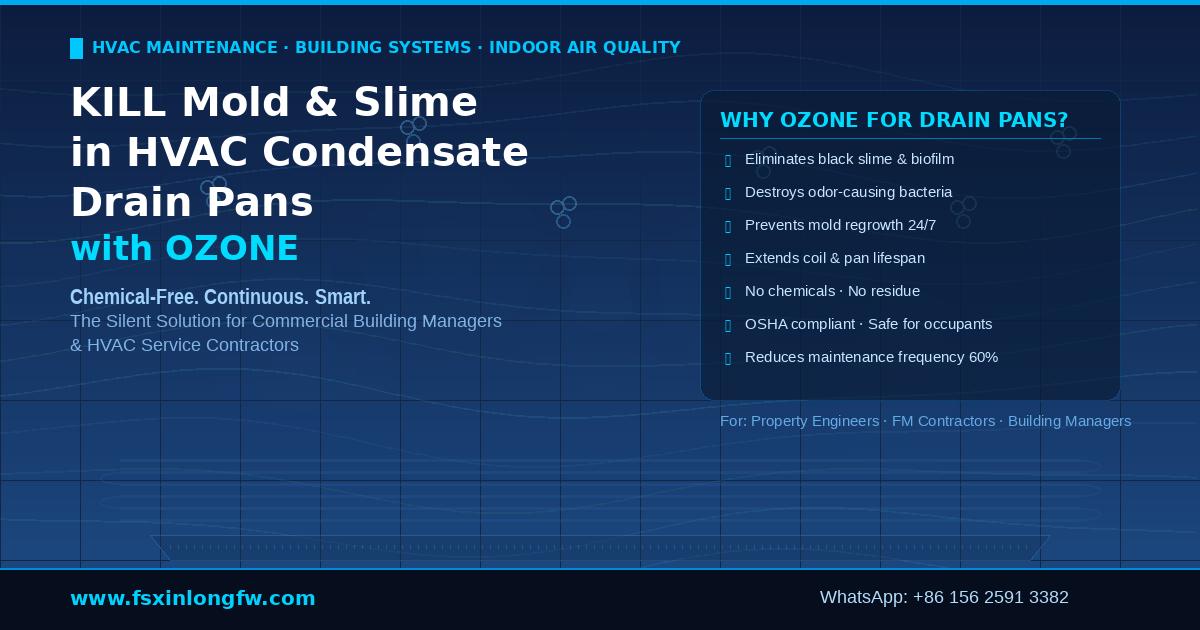
Commercial HVAC Maintenance: Using Ozone to Prevent Mold and Slime in Condensate Drain Pans
Commercial HVAC Maintenance: Using Ozone to Prevent Mold and Slime in Condensate Drain Pans
If you manage commercial properties or oversee a multi-site HVAC maintenance contract, you already know the headache of the mid-summer service call: tenants complaining about musty "dirty sock" odors coming through the vents, or worse, a ceiling leak caused by an overflowing condensate drain pan.
Standard biocide tablets and monthly chemical flushes only buy you a few weeks of relief. Once algae, mold spores, and bacterial slime (biofilm) establish a foothold in the dark, damp environment of an air handling unit (AHU), they rapidly clog drain lines and corrode pan surfaces.
Increasingly, facility engineers and commercial contractors are shifting from reactive chemical dosing to continuous HVAC condensate pan ozone systems. Here is how low-concentration ozone works inside commercial cooling systems, how to size it properly, and why it cuts down recurring maintenance labor.
Why Traditional Drain Pan Tablets Fall Short in Commercial Buildings
In high-tonnage commercial HVAC systems, cooling coils pull gallons of moisture out of the air every hour. That standing water sits in the condensate pan at temperatures ideal for microbial growth—typically between 55°F and 75°F (13°C–24°C).
Most maintenance teams rely on slow-dissolving chlorine or quaternary ammonium tablets. In practice, these present three ongoing operational problems:
- Uneven distribution: Tablets sit in one corner of the pan, leaving dead zones at the far end where thick black slime continues to accumulate.
- Residue buildup: As tablets dissolve, binders and fillers can actually contribute to sludge inside P-traps and float switches.
- Coil corrosion: Aggressive chemical vapors trapped inside a closed AHU cabinet can accelerate pitting on copper and aluminum evaporator fins over time.
How an Ozone Commercial HVAC Drain Pan Sanitizer Works
Ozone (O3) is a potent, short-lived oxidizer that destroys bacteria, mold spores, and viral pathogens on contact by rupturing their cell walls. Unlike chemical biocides, it leaves zero chemical residue and reverts cleanly back into oxygen (O2) within minutes.
When integrated into a commercial air handler, a compact commercial HVAC drain pan sanitizer operates in one of two ways:
- Direct Aqueous Ozonation (For Condensate Pans & P-Traps): A small-output ozone generator injects micro-bubbles of ozone gas directly into the drain pan water via a submerged diffuser stone. Maintaining a low dissolved ozone residual of 0.1 to 0.3 ppm keeps the water crystal clear and prevents biofilm from anchoring to the pan or drain pipe walls.
- Gas-Phase Coil & Plenum Sanitation: Low-level gaseous ozone is introduced downstream of the evaporator coil during off-peak or unoccupied hours. This reaches into the tight aluminum fin spacing where standing water and organic dust trigger foul odors.
| Maintenance Method | Biofilm & Slime Control | Chemical Residue | Drain Line Clogging Risk | Labor Frequency |
|---|---|---|---|---|
| Biocide Tablets | Partial (local to tablet) | High (sludge/binders) | Moderate to High | Monthly replacement |
| Manual Bleach Flush | Temporary (resets in 2–3 wks) | Corrosive runoff | High between visits | Quarterly / Reactive |
| Continuous Ozone | Full pan & drain line coverage | Zero (reverts to O2) | Minimal (keeps pipes clear) | Annual checkup only |
Key Sizing & Safety Guidelines for Facility Engineers
Implementing air conditioner mold prevention ozone in a commercial building does not require heavy industrial machinery. In fact, over-sizing is the most common mistake contractors make. Because an HVAC system circulates air into occupied spaces, precision output control is critical.
- Match Output to Tonnage: For standard commercial AHUs (10 to 50 tons), a compact generator producing 200 mg/h to 1,000 mg/h of ozone is typically sufficient for continuous drain pan water treatment.
- Use Programmable Duty Cycles: Run the generator intermittently (e.g., 10–15 minutes ON, 45–60 minutes OFF) or interlock it with the AHU fan relay so ozone is only generated when cooling condensate is actively flowing.
- Verify Material Compatibility: Ensure any tubing inside the AHU cabinet uses ozone-resistant silicone or PTFE (Teflon) rather than standard vinyl or rubber, which will crack over time.
- Maintain Safe Indoor Air Limits: Properly calibrated aqueous drain pan systems keep ambient air ozone levels well below OSHA and ASHRAE safety thresholds (under 0.05 ppm) because the gas is consumed oxidizing organic matter inside the water pan.
Engineering Tip: When retrofitting an older AHU that already has heavy black algae buildup, mechanically clean the pan and flush the P-trap before activating the ozone system. Ozone will strip existing biofilm off the pan walls—which can temporarily flush loose debris into the drain line during the first 48 hours of operation.
Recommended Equipment for Commercial AHU Drain Pans
For small-to-midsize commercial air handling units (10 to 30 tons), you do not need bulky industrial ozone cabinets. A compact, programmable unit like our 500 mg/h Cycle-Timer Ozone Generator (Model N202F) is specifically suited for automated condensate pan treatment:
- Built-In Digital Cycle Timer: Easily program custom run/rest intervals (0–40 min ON / 30–360 min OFF) directly on the LCD panel to maintain continuous biofilm control without over-accumulating ozone in the ductwork.
- Safe 12V DC Low-Voltage Operation: Ideal for damp mechanical rooms and easy integration into existing HVAC control panels.
- Complete Diffuser Kit Included: Comes ready with ozone-resistant silicone tubing and a fine-bubble diffuser stone—simply submerge the diffuser at the deepest point of the condensate pan (near the drain outlet) or inside the condensate P-trap for maximum gas-to-water dissolution.
Cut Callback Rates and Chemical Costs Across Your Facility
For commercial HVAC service contractors, recurring drain line clogs and odor complaints eat directly into maintenance contract margins. Installing a dedicated ozone sanitation module turns a monthly manual chore into an automated, set-and-forget safeguard.
Ready to Spec an Ozone Solution for Your HVAC Systems?
- Explore the Unit: Check full technical specs and bulk pricing for the N202F 500 mg/h Programmable Ozone Generator.
- Need Higher Output or Multi-Unit Quotes? For large central chillers (50+ tons) or multi-building maintenance contracts, contact our team with your AHU tonnage—we supply custom ozone systems from 500 mg/h up to industrial scale.
Tags:
Related Posts