




How to Choose the Right Ozone Injector and Sparger for Dissolved Ozone Systems
How to Choose the Right Ozone Injector and Sparger for Dissolved Ozone Systems
Achieving high dissolved ozone efficiency is often the hardest part of designing a reliable water treatment system. Whether you are working on municipal wastewater, aquaculture recirculation systems (RAS), bottled water lines, or industrial laundry disinfection, generating ozone gas is only half the battle. The real challenge is transferring that gas completely and efficiently into the liquid phase without massive off-gassing or wasting expensive energy.
For system integrators and procurement engineers, selecting the correct industrial ozone equipment accessories—specifically venturi injector ozone mixing units and fine-bubble diffusers—determines whether your system meets treatment standards or fails under heavy operational loads.
In this guide, we break down how to choose and combine these core components for maximum performance.
1. The Primary Mixer: Why Venturi Injectors Drive Mass Transfer
When water and ozone gas meet, traditional open-tank bubbling is rarely enough to achieve high concentrations. This is where Venturi injectors play a crucial role.
A Venturi injector works on the principle of differential pressure. As water flows through the constricted throat of the Venturi, velocity increases and a vacuum is created, drawing ozone gas directly into the water stream and shearing it into microscopic bubbles.
Key Selection Criteria for Venturi Injectors:
- Material Compatibility: Ozone is a powerful oxidizer. Standard plastics or low-grade metals will degrade rapidly. Always specify PVDF (Polyvinylidene Fluoride) or 316L stainless steel bodies with PTFE internals.
- Pressure Drop Ratio: Check the inlet-to-outlet pressure differential required to create sufficient suction. A well-matched Venturi should achieve a gas-to-liquid mixing efficiency of 85% to 92% right at the injection point when paired with a booster pump.
- Water Flow Rate (M³/h): Size the injector strictly according to your main water line's operating flow rate, rather than just pipe diameter, to ensure optimal suction velocity.
2. The Secondary Polisher: Why a Titanium Plate Sparger is Non-Negotiable
While a Venturi handles bulk mass transfer, contact tanks and deep reaction basins require sub-surface aeration to maintain dissolved ozone residual and strip out residual micro-bubbles.
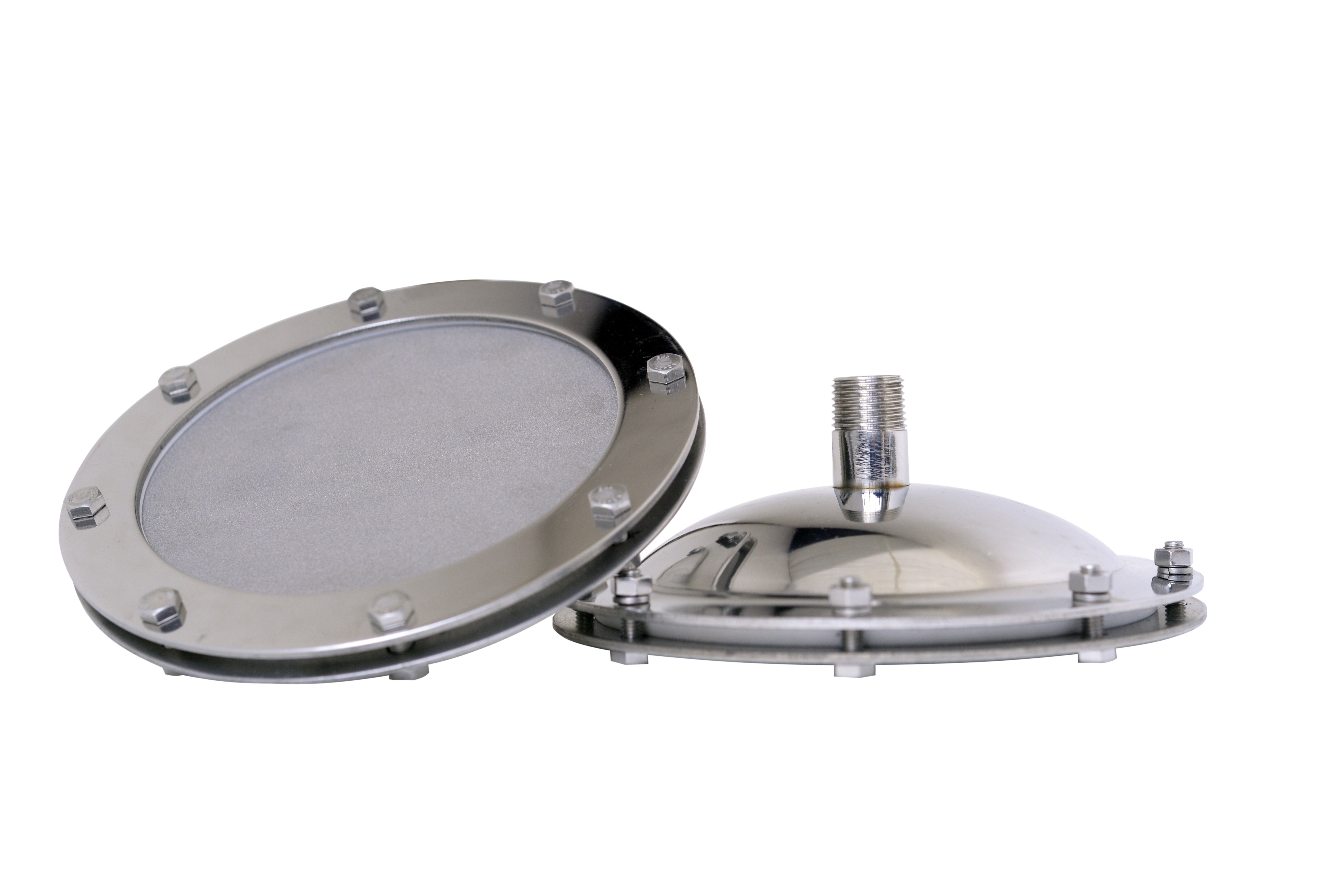
Many engineers make the mistake of using standard EPDM rubber or ceramic diffusers. Ozone attacks rubber instantly, and ceramic pores clog easily with mineral scale or biological growth. This is why a titanium plate sparger for ozone has become the gold standard in industrial and municipal installations.
Engineering Tip: Sintered titanium powder spargers (typically available in disc formats like 180mm or custom rectangular panels) offer uniform pore distribution, typically ranging from 0.2 to 20 microns. This creates an ultra-fine bubble curtain that maximizes gas-liquid contact surface area.
Advantages of Titanium Spargers:
- Absolute Corrosion Resistance: Grade 1 and Grade 2 titanium withstands high ozone concentrations and harsh chemical cleaning (such as CIP acid/alkali flushes).
- High Mechanical Strength: Sintered titanium plates withstand high operating backpressures (up to 4–6 bar in demanding setups) without cracking.
- Long Operational Lifespan: Unlike disposable diffusers that require frequent replacement, a properly maintained titanium sparger operates reliably for years.
3. Designing the Complete System: Venturi + Sparger Synergy
To achieve peak dissolved ozone efficiency, high-end system designs do not rely on just one method—they combine both.
[Oxygen Source] ➔ [Ozone Generator]
                           │
                           ▼
[Raw Water] ➔ [Booster Pump] ➔ [Venturi Injector] ➔ [Contact Tank] ➔ [Titanium Sparger (Bottom)] ➔ [Degas Valve] ➔ [Clean Water Out]
- Stage 1 (Primary Injection): The ozone generator feeds gas into a PVDF Venturi injector installed on a bypass loop powered by a gas-liquid mixing pump. This dissolves the bulk of the ozone instantly.
- Stage 2 (Contact & Polishing): The treated water enters the bottom of a vertical contact tank, where a titanium plate sparger introduces a secondary fine-bubble stream from the bottom up, ensuring a stable dissolved ozone residual (measured dissolved ozone sensors).
- Stage 3 (Off-Gas Management): Any un-dissolved gas is safely vented through an ozone destructor at the top of the tank.
4. Quick Procurement Checklist for Engineers
Before submitting your Bill of Materials (BOM) to clients or assembly lines, verify these parameters:
| Component | Key Parameters to Confirm | Recommended Material |
| Venturi Injector | Water flow (m³/h), suction capacity (g/h), port size | PVDF / PTFE |
| Mixing Pump | Flow rate, head pressure, mechanical seal compatibility | Stainless Steel 316 / Silicon Carbide |
| Sparger Plate | Diameter (e.g., 180mm), pore size (um), connection thread | Sintered Titanium (Gr1/Gr2) |
| Ozone Sensor | Range (0-2 ppm / 0-20 ppm), 4-20mA output for PLC | Ampolar / Clark cell with auto-cleaning |
Upgrade Your Water Treatment System Today
Selecting certified, high-durability components prevents costly system downtime and protects your reputation with end-users.
As a direct manufacturer and system partner specializing in industrial ozone equipment, we supply high-performance PVDF Venturi injectors, sintered titanium aeration discs, and complete ozone mixing skids designed for global water treatment projects.
Need custom sizing or technical drawings for your project? Contact our engineering team today to request a customized equipment configuration and wholesale quotation. Let’s optimize your system efficiency together.
Tags:
Related Posts