




How Ozone Generators Prevent Mold & Boost Yields in Mushroom Cultivation (Air & Water Sterilization Guide)
How Ozone Generators Prevent Mold & Boost Yields in Mushroom Cultivation (Air & Water Sterilization Guide)
Mushroom cultivation is a high-precision agricultural industry where environmental purity directly dictates your profitability. Unlike traditional photosynthetic crops, edible fungi thrive in dark, warm, and highly humid environments—conditions that are equally perfect for competitive molds, bacteria, and viral pathogens.
A single outbreak of Trichoderma (Green Mold) or bacterial soft rot can devastate an entire flush, destroying months of work and thousands of dollars in input costs.
While conventional liquid disinfectants (such as chlorine or formaldehyde) have long been used, they often leave toxic residues, require heavy labor, and become ineffective over time as pathogens build resistance. This is why commercial mushroom growers worldwide are shifting toward ozone generator systems for mushroom cultivation as an eco-friendly, automated, and chemical-free sterilization method.
The Root Cause: Why Fungus Cultivation Is So Vulnerable to Contamination
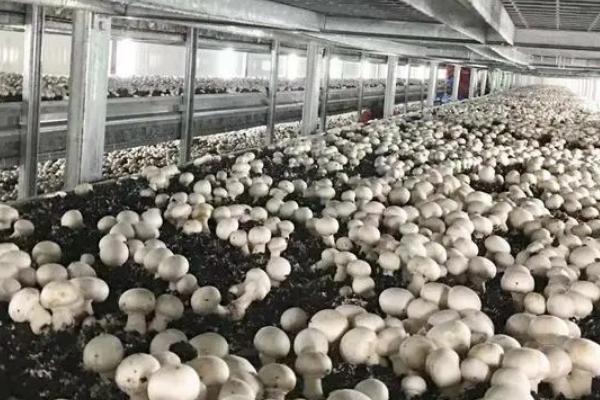
Edible mushrooms (such as Shiitake, Oyster, Button, and King Oyster) are cultivated on organic substrates like sawdust, straw, or grain. During incubation and fruiting, ambient air carries millions of airborne mold spores, wild yeast, and bacteria.
Common threats in mushroom grow rooms include:
- Trichoderma spp. (Green Mold): The most aggressive competitor in mushroom farming.
- Bacterial Blotch (Pseudomonas tolaasii): Causes severe discoloration and rotting on caps.
- Cobweb Mold (Cladobotryum): Spreads rapidly across casing soil under high relative humidity.
Achieving a near-sterile environment—especially in inoculation and incubation zones—is essential to ensuring high crop density and maximum yields.
How Ozone (O₃) Protects Edible Fungus Rooms
Ozone is a naturally occurring, powerful oxidizing agent. When generated inside a grow room or dissolved in wash water, it neutralizes pathogens instantly on contact by breaking down their cellular walls.
Ozone Molecule (O₃) ➔ Contacts Bacteria/Mold Spore ➔ Oxidizes Cell Wall ➔ Reverts Back to Pure Oxygen (O₂)Unlike chemical foggers, ozone leaves zero toxic chemical residue. After the disinfection cycle finishes, unused ozone naturally decomposes back into standard oxygen (O2), leaving behind a clean, oxygen-rich environment for healthy mycelium growth.
Strategic Application Zones in Commercial Mushroom Farms
To maximize yield protection, an edible fungus room ozone machine should be integrated across three core production stages:
1. Inoculation & Spawn Rooms (Ultra-Clean Air Requirement)
The inoculation stage is where mushroom spawn is introduced into sterilized substrates. Any airborne competitor spores present at this stage will outgrow the mushroom mycelium.
- Application: Run gas-phase ozone sterilization overnight or during pre-operation hours when no workers are present.
- Result: Eliminates 99.9% of floating mold spores and surface contaminants on workbenches and equipment.
2. Incubation & Fruiting Chambers (Spore & Humidity Management)
Fruiting rooms maintain high relative humidity (85%–95%), which encourages aggressive mold growth if not controlled.
- Application: Use automated cyclic micro-dosing or scheduled off-peak shocking to purify recirculated HVAC air and keep air ducts mold-free.
- Result: Suppresses cross-contamination between substrate bags/blocks and prolongs the productive lifespan of each grow room.
3. Substrate Moisture & Facility Washdown (Ozonated Water)
Water quality used for substrate hydration and casing moisture directly affects crop safety.
- Application: Inject ozone into incoming process water to create ozonated water for surface washing, floor sanitization, and irrigation line flushing.
- Result: Disinfects floor drains and trays without chemical build-up, neutralizing pathogens before they enter the air.
Ozone vs. Chemical Sanitizers: ROI & Operational Efficiency
| Feature / Benefit | Traditional Chemicals (Chlorine/Formaldehyde) | Ozone Generator Systems |
| Chemical Residue | High (Requires post-wash rinsing) | Zero (Reverts to pure O2) |
| Pathogen Resistance | Pathogens build immunity over time | No resistance possible (Physical oxidation) |
| Labor Cost | High (Manual mixing, spraying, wiping) | Low (Fully automated timing & controls) |
| Recurring Supply Cost | High (Ongoing chemical purchasing) | Low (Uses air and electricity only) |
| Organic Compliance | Often restricted | Approved for organic agriculture |
Best Practices: Operating Your Mushroom Farm Ozone Machine Safely
To achieve optimal results without damaging young mycelium or exposing operators to high gas concentrations, follow these best practices:
- Shock Sterilization (Empty Rooms): Between crop cycles, perform high-concentration shock treatments to completely sanitize walls, racks, and ventilation ducts.
- Cyclic Low-Dose Purifying: Use a unit equipped with a timer (e.g., operating for 10 minutes every 2 hours) to maintain low microbial counts in common working areas.
- Flexible & Mobility: Portable ozone generators allow growers to move units between small incubation cabinets, vehicle transport bays, or isolated spawn tents seamlessly.
- Safety Buffer Time: Always allow 30 to 45 minutes after switching off high-concentration ozone equipment before staff re-enter the facility, ensuring all ozone converts back to oxygen.
Finding the Right Ozone Solution for Your Farm
Every mushroom facility operates with distinct room volumes, humidity levels, and layout constraints. Whether you run a compact boutique exotic mushroom facility or a large-scale commercial industrial farm, selecting reliable ozone hardware is critical to steady production.
- For Compact Incubators & Small Growing Tents: Compact AC/DC flexible ozone units (such as our 202F and 202C series featuring multi-interval timers and dual-power inputs) offer simple plug-and-play air and water purification.
- For Large Commercial Mushroom Facilities: Centralized high-output industrial ozone generators paired with venturi water injection systems ensure complete air duct and irrigation water sterilization.
Ready to Reduce Contamination and Increase Mushroom Yields?
Preventing mold outbreaks is far more profitable than treating a contaminated crop. Upgrading your facility with an ozone generator for mushroom cultivation guarantees cleaner air, safer water, and higher yields year-round.
Contact Our Agricultural Disinfection Experts Today
- Get a customized ozone dosage calculation for your specific grow room dimensions.
- Request factory-direct B2B wholesale pricing and technical documentation.
👉 [Click Here to Send an Inquiry / Contact Our Team]
👉 [Explore Our Agricultural Ozone Generator Catalog]
(Lead Form) :
Name, Business Email, Farm Size / Room Volume (m^3), Message。
Tags:
Related Posts